

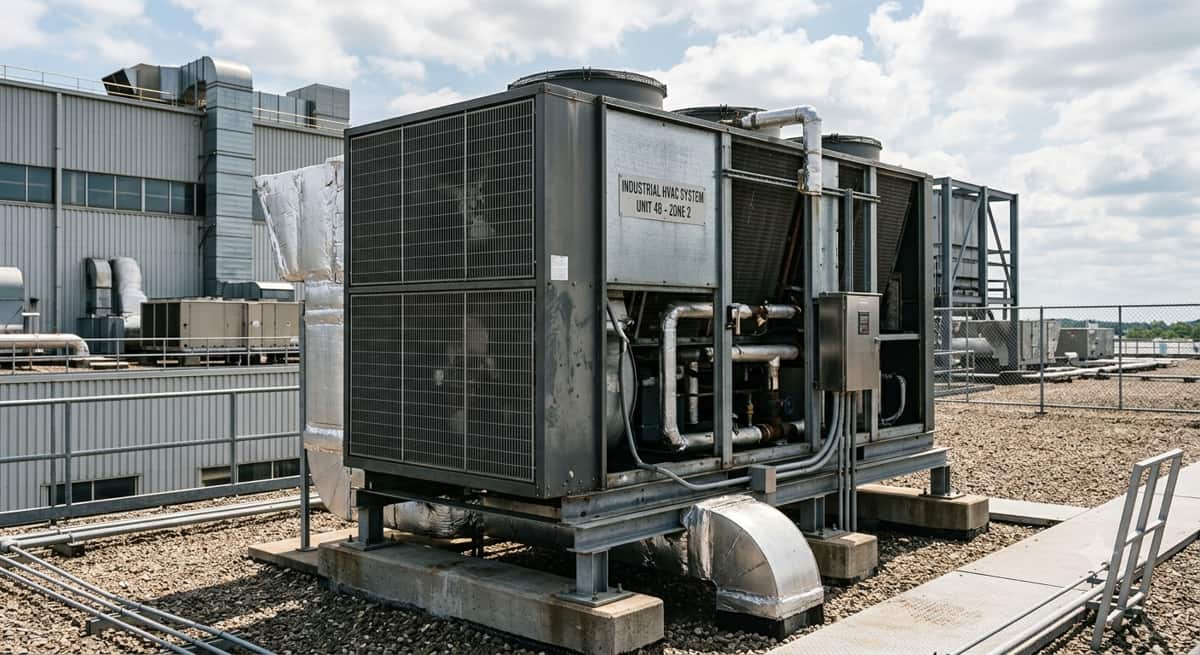
How Much Does an Industrial Air Conditioning System Cost in Bangladesh?

If you are running a garment factory, a pharmaceutical unit, cold storage or any big work place in Bangladesh, normal split ACs don’t do the job. You require something that is designed for more extensive regions, extended working hours and harsher conditions. Of course, the first question that comes to your mind is: how much will it actually cost me?
A rough estimate of the cost for industrial air conditioning in Bangladesh varies from roughly ৳3–5 lakh for a small ducted split setup, to between 15–40 lakh or more for a mid-size VRF system, and going well over 50 lakh+ in price cover large chiller plants cooling large factories/multi-floor buildings. These are rough starting points, not hard prices the truth is that your real number depends on how big your space is, which brand you go with and a handful of other things we’ll break down below.
Average Industrial AC Price Range in Bangladesh
If you just want a quick idea before diving into the details, here’s a simple breakdown:
- Ducted split systems: roughly ৳3–8 lakh, good for smaller workshops or single-floor offices
- VRF/VRV systems: roughly ৳10–40 lakh, common in mid-to-large factories and commercial buildings
- Rooftop package units: roughly ৳5–15 lakh, popular for warehouses and single large open spaces
- Chiller systems: roughly ৳25 lakh to over ৳1 crore, used in large-scale factories, hospitals, and pharma units
Keep in mind these figures move up or down depending on the brand you pick, the size of your building, and import duty rates at the time you buy. Think of this as a starting point for your budgeting conversation, not a final quote.
What Counts as “Industrial” Air Conditioning?
Not every big AC is “industrial.” A large split unit cooling your office lobby is still, technically, commercial-grade. Industrial air conditioning cooler refers to systems built to cool large, often harsh environments think of a garment factory floor with heavy machinery running all day, or a cold storage warehouse that needs to hold a steady temperature no matter what’s happening outside.
The main types you’ll come across are:
- Ducted split systems — one outdoor unit connected to ducting that spreads cool air across a space
- VRF/VRV systems — flexible systems that can cool multiple zones at different temperatures at once
- Rooftop package units — self-contained units often used for warehouses and open factory floors
- Chillers — the heavy-duty option, cooling water that’s then circulated to cool large buildings or industrial processes
- Ventilation and exhaust add-ons — often needed alongside cooling in factories to manage heat and air quality
Common Applications in Bangladesh
Walk into any RMG (garment) factory in Gazipur or Narayanganj, and you’ll likely find ducted or VRF systems keeping both workers and machines comfortable. Pharmaceutical companies need much tighter temperature and humidity control, so they often go for chillers with precise settings. Cold storage facilities for food, seafood, or agricultural exports rely on specialized industrial cooling built for very low temperatures. And with more data centers and large warehouses coming up across Dhaka and Chattogram, industrial cooling demand here has grown quite a bit over the past few years.
Key Factors That Affect Industrial AC Pricing in Bangladesh
If you’re wondering why one factory pays ৳10 lakh and another pays ৳50 lakh for what sounds like the same thing, it usually comes down to these factors.
Cooling Capacity (Tonnage) Required
The bigger the space and the more heat your machines or people generate, the more “tonnage” you need. A small 2,000 sq ft office needs a fraction of the cooling power that a 20,000 sq ft factory floor packed with machinery needs. Getting this number right matters undersized systems struggle and wear out fast, while oversized ones waste money on equipment you don’t need.
System Type (Ducted Split vs VRF vs Chiller vs Package Unit)
There is a reason why each system type has a different price tag. This makes the ducted splits easier and cheaper to do but they are performed best in smaller or single-zone areas. VRF systems are more expensive at the time of installation as well, but allows you a bit more room in multiple or even all rooms and floors. Chillers are the most expensive option, but they are also the most powerful and reliable for very large or sensitive environments like pharma manufacturing.
Brand and Country of Origin
Companies like that are Daikin, Carrier, York, Midea, Gree who all deal in the Bangladeshi market but at varying prices. Premium Japanese and American brands generally come at higher costs but also have longer service life and superior after-sales service. Chinese manufacturers have proven themselves to be more affordable, and the reliability has increased in recent years a better middle-of-the-road alternative for many budget-stressed factories.
Import Duty, VAT, and Customs Costs in Bangladesh
Since almost all industrial AC equipment is imported, government duties and taxes are a real part of your final cost sometimes a significant one. These rates can change, so rather than quoting a fixed percentage here, it’s worth asking your supplier for the current landed cost breakdown, or checking the latest tariff schedule from the National Board of Revenue (NBR) before you finalize your budget.
Installation, Ducting, Electrical, and Civil Work Costs
Here’s something many first-time buyers miss: the price of the AC unit itself is not your total cost. You’ll also need to budget for ducting, electrical wiring and panels, mounting structures, and sometimes civil work like reinforcing a roof or building a plant room. Depending on your building’s condition, this can add anywhere from 15% to 40% on top of the equipment cost.
Industrial AC Price Breakdown by System Type
| System Type | Typical Capacity | Approx. Price (BDT) | Best For |
| Ducted Split | 3–10 tons | ৳3–8 lakh | Small workshops, offices, retail spaces |
| VRF/VRV | 10–50 tons | ৳10–40 lakh | Mid-to-large factories, multi-zone buildings |
| Rooftop Package Unit | 5–25 tons | ৳5–15 lakh | Warehouses, single open factory floors |
| Chiller (Air/Water-cooled) | 30 tons and up | ৳25 lakh–1 crore+ | Large factories, hospitals, pharma plants |
A ducted split makes sense if you’re cooling one floor of a small operation and want to keep things simple. VRF systems earn their higher price by letting you control temperature separately in different sections useful if your factory has both a hot production floor and an air-conditioned office area. Rooftop units are a practical, cost-effective choice for large open warehouses where you don’t need zoning. And chillers, while the most expensive, are often the only realistic option once you’re cooling a genuinely large facility or one with strict temperature requirements.
Ducted Split vs VRF vs Chiller — Which Is Most Cost-Effective for Your Factory?
There’s no single “best” system it really depends on your building and how you use it.
If your factory is a single open floor with fairly uniform cooling needs, a ducted split or rooftop package unit usually gives you the best value. You’re not paying for flexibility you don’t need.
If your building has multiple sections that need different temperatures say, an air-conditioned sample room next to a warmer production area a VRF system often pays for itself over time through better energy efficiency and zone control, even though it costs more upfront.
If you’re running a pharmaceutical facility, a large cold storage unit, or a factory where temperature swings simply aren’t an option, a chiller system is usually worth the higher investment. It’s built for consistency at scale, and cutting corners here can end up costing more in product loss or compliance issues down the line.
A simple way to think about it: match the system to your actual daily operation, not just your budget on day one. The cheapest option upfront isn’t always the cheapest option over five years.
Hidden or Additional Costs Buyers Often Miss
A lot of factory owners budget for the AC unit and installation, then get caught off guard by ongoing costs. Here’s what to plan for:
- Annual Maintenance Contracts (AMC) — regular servicing to keep the system running efficiently and catch problems early
- Spare parts and refrigerant top-ups — normal wear-and-tear items over the system’s life
- Voltage stabilizers — important given occasional power fluctuations in some industrial areas
- Generator backup compatibility — if your factory relies on generators during load-shedding, your AC system needs to work with that setup
- Energy costs — larger systems mean higher electricity bills, so it’s worth asking about energy efficiency ratings before you buy
Factoring these in from the start will save you from surprises later and give you a much more realistic picture of what the system will actually cost you over time.
How to Get an Accurate Quote for Your Facility
Online price ranges are useful for planning, but the only way to get a number you can actually rely on is a proper site assessment. A good supplier will usually:
- Visit your site (or review detailed floor plans) to calculate the actual heat load
- Ask about your machinery, working hours, and number of people in the space
- Recommend a system type and capacity based on that specific data
- Give you a full quote that includes equipment, installation, ducting, and electrical work not just the unit price
If a supplier gives you a firm price without ever asking about your space or usage, that’s usually a sign the number isn’t accurate. It’s worth being a little cautious there.
Why Work With a Licensed Industrial AC Importer/Supplier in Bangladesh
Industrial AC systems are a serious investment, who you buy from matters almost as much as what you buy. A licensed established importer typically offers:
- Genuine products with proper import documentation this protects your warranty and avoids the risks that come with grey-market units
- Manufacturer-backed warranty support, so you’re not stuck if something goes wrong
- A local after-sales service network for repairs, maintenance, and spare parts critical for equipment that needs to run reliably every single day
- A technical team that can properly calculate your cooling needs instead of just guessing
Selecting the top industrial air cooler supplier in Bangladesh means you’re not only getting excellent equipment, you’re getting dependable technical assistance for the life of the system.
Getting the Right System at the Right Price
Industrial air conditioning is one of those investments where the price tag tells part of the story& they actually need to take into account several other variables. Find the right conditioning system, working with a cool room supplier that understands your commercial usage of the space & stands behind their system is going to put more bottom line dollars back in your pocket much more than shopping for the lowest quote. If you are going to buy something, the logical next step is a full site survey that is the only way of getting from an approximate range to a number which can feature in your budget.
Frequently Asked Questions
What is the price of a 5-ton industrial AC in Bangladesh?
A 5-ton system typically falls in the ducted split or small package unit range, generally costing around ৳3–6 lakh depending on brand and installation requirements.
Is VRF or ducted split cheaper for factories?
Ducted split systems are cheaper upfront, but VRF systems can be more cost-effective long-term if you need multiple temperature zones or better energy efficiency.
Does the price include installation?
Not usually. Equipment price and installation (ducting, electrical, mounting) are often quoted separately, so always ask for a full breakdown before comparing quotes.
How long does industrial AC installation take?
Smaller ducted or package unit installations can take a few days to a couple of weeks, while larger VRF or chiller installations may take several weeks depending on site readiness.
Are imported industrial ACs taxed heavily in Bangladesh?
Import duty and VAT do add to the cost, and rates can change over time, so it’s best to confirm current figures with your supplier or the National Board of Revenue before finalizing your budget.
What’s the typical warranty period?
Most reputable brands offer 1–5 years on parts and compressors, though this varies by manufacturer and sometimes by whether you’re on an AMC plan.