

How Does an Evaporative Cooling Pad Work? A Simple Guide

If you’ve ever walked into a poultry shed or a garment factory floor in Dhaka around midday in June, you already know the feeling of the air feels thick, the fans just seem to push hot air around, and everyone inside is uncomfortable. This is exactly the kind of heat that pushes farm owners and factory managers to start looking into high-efficiency cooling pads.
But before spending money on a system, it’s worth actually understanding how it works and whether it’s the right fit for our weather here in Bangladesh.
What Is an Evaporative Cooling Pad?
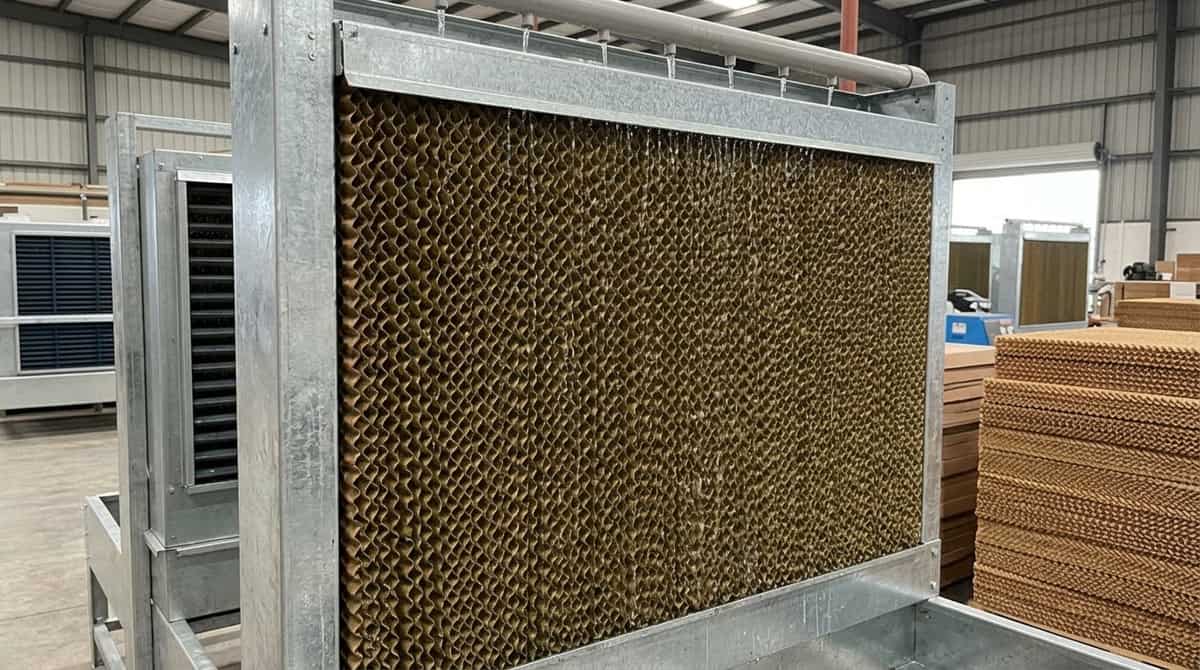
An evaporative cooling pad is a thick, honeycomb-like pad usually made from a material called cellulose that stays constantly wet with a thin layer of water.
Think about standing in front of a fan while wearing a wet shirt. You feel cooler almost instantly, right? That’s the same basic idea behind an evaporative cooling pad, just built into a proper system.
Hot air from outside is pulled through this wet pad, and by the time it comes out the other side, it’s noticeably cooler. On its own, the pad doesn’t do much. It works as part of a small system, along with a water pump and a fan, which we’ll look at shortly.
How It Actually Works, Step by Step
You don’t need to be an engineer to understand this, it’s really just four simple steps happening one after another.
Step 1: Water wets the pad. A small pump continuously sends water to the top of the pad, and gravity lets it trickle down evenly, keeping the entire surface damp.
Step 2: Hot, dry-ish air gets pulled through. A fan on the other side of the pad draws outside air through the wet material.
Step 3: The water evaporates and takes heat with it. This is the part people usually find surprising. When water evaporates, it needs energy to turn from liquid into vapor, and it pulls that energy in the form of heat from the surrounding air. So as air passes through the wet pad, some of its heat gets “used up” in evaporating the water, and the air that comes out the other side is cooler.
Step 4: Cooler air enters the room or shed. The fan pushes this now-cooler (and slightly more humid) air into the space of the poultry shed, the factory floor, or the greenhouse bringing the temperature down.
That’s really the whole mechanism. No refrigerant, no compressor, no complicated chemistry, just water, air, and a bit of physics doing the work.
Key Components of a Cooling Pad System
A cooling pad rarely works alone. A complete system usually has four main parts, and it helps to know what each one does before you buy:
- The cooling pad itself — the thickness and the angle of the internal flutes (the ridges inside the pad) affect how well it holds water and how much cooling it provides.
- A water pump and distribution pipe — this keeps water flowing steadily to the top of the pad so it never dries out in patches.
- An exhaust or blower fan — this pulls air through the pad and pushes the cooled air into the space. The fan’s strength needs to match the size of the room.
- A gutter and water tank (sump) — this collects the water that drips down after passing through the pad, so it can be reused instead of wasted.
Each part affects the others. A strong fan paired with a thin or low-quality pad won’t cool well, and a good pad with an unreliable water supply will dry out and stop working properly. It’s really the combination that determines how well the whole system performs.
Why Humidity Matters – The Bangladesh Factor
This is the part that often gets left out of guides written for other countries, but it matters a lot here.
Evaporative cooling works best when the air is hot and dry. That’s because dry air can “hold” a lot more moisture, so water evaporates faster and pulls more heat out of the air as it does. In a place like the Middle East or parts of North India, where summer air is hot but has low humidity, evaporative cooling pads can drop the temperature dramatically, sometimes by 10°C or more.
Bangladesh’s summers, though, are hot and humid. Our air is already carrying a lot of moisture, especially closer to the monsoon season, which means water evaporates more slowly from the pad. In practical terms, this means the temperature drop you’ll get here is usually more modest often somewhere in the range of a few degrees rather than a dramatic drop and it will vary noticeably between the drier months and the more humid ones.
This doesn’t mean the system isn’t worth it. It just means expectations should be set correctly from the start, and getting the airflow and pad wetness properly balanced for our climate matters even more here than it would in a drier country.
Common Uses in Bangladesh
Cooling pads show up in quite a few settings across the country, each with its own reason for needing them:
- Poultry sheds — heat stress is one of the biggest causes of reduced egg production and higher mortality in layer and broiler farms, so keeping shed temperatures down is a real priority for farm owners.
- Textile and garment factories — factory floors get hot fast with machinery running and large numbers of workers in one space, and cooler conditions directly affect comfort and productivity.
- Greenhouses and nurseries — plants can suffer just as much from heat stress as animals do, and a controlled temperature helps protect crop yield.
- Warehouses and storage spaces — especially where goods are sensitive to heat, keeping the air moving and slightly cooler helps protect stored inventory.
Types of Cooling Pad Material
Not all pads are made the same way, and the material affects both performance and how long the pad lasts.
Cellulose pads are the most common choice. They’re made from treated paper-like material formed into a honeycomb shape, and they tend to offer a good balance of cooling performance, water absorption, and reasonable cost.
Aspen or wood-wool pads are an older, simpler option essentially loosely packed wood fiber. They can work, but they tend to wear out faster and don’t cool as evenly as cellulose pads.
PVC pads are more durable and resistant to damage from water and algae, but they generally don’t absorb water as well as cellulose, which can mean slightly less cooling efficiency.
For most farm and factory settings, cellulose remains the standard choice, with the specific thickness chosen based on the climate and airflow needs of the space.
Benefits and Limitations, Honestly
The benefits:
- Runs on far less electricity than air conditioning, since there’s no compressor involved.
- Lower running cost over time, which matters a lot for large spaces like sheds and factory floors.
- A simple, low-maintenance mechanism with few moving parts to break down.
- Brings in fresh outside air rather than recirculating the same indoor air.
The limitations:
- Performance drops noticeably in high humidity, as covered above this is the biggest factor to plan around in Bangladesh.
- It needs a steady, clean water supply to work properly.
- The pad wears out over time and needs periodic cleaning or replacement.
- It’s not a like-for-like replacement for air conditioning in fully sealed spaces or situations where industrial dehumidification or strict humidity control is required. .
Knowing both sides upfront helps avoid disappointment after installation. This system does one thing well (cooling large, ventilated spaces affordably), but it isn’t the right tool for every situation.
Maintenance Tips for Longer Pad Life
A little regular care goes a long way toward getting the full lifespan out of a cooling pad system:
- Watch your water quality. Hard water, common in many parts of Bangladesh, can leave mineral deposits on the pad over time, which reduces how well it absorbs water.
- Check for algae growth. Our humid climate makes algae buildup more likely inside the water tank and gutters, so periodic cleaning helps keep water flowing cleanly through the pad.
- Clean the pad regularly, especially during dustier months, since dust and debris can clog the pad’s surface and reduce airflow.
- Adjust for the season. During the monsoon, when humidity is naturally higher, you may need to run the system differently than during the drier months.
- Replacing the pad when needed most cellulose pads last a few years with proper care, but a pad that’s sagging, cracked, or heavily mineral-crusted won’t cool effectively no matter how well the rest of the system is maintained.
How to Choose the Right System for Your Space
A few practical questions can help narrow down the right setup:
- How big is the space? Larger sheds or factory floors need stronger fans and more pad surface area to cool effectively.
- What’s the pad thickness suited for our climate? Given the humidity here, getting this right matters more than it would in a drier country.
- How reliable is your water source? A system is only as good as its water supply; inconsistent water pressure or quality will affect performance.
- What’s your budget, both upfront and ongoing? A cheaper system with poor components may end up costing more over time in repairs, water waste, or reduced cooling.
Taking a bit of time to think through these questions before buying makes it much easier to end up with a system that actually performs well for your specific space.
Final Thoughts
An evaporative cooling pad works through a simple idea: water absorbing heat as it evaporates is put into a practical system of a pad, a pump, and a fan. In Bangladesh’s hot and humid climate, it won’t cool quite as dramatically as it would in a drier country, but for large spaces like poultry sheds, factory floors, and greenhouses, it still offers a genuinely affordable and effective way to bring the temperature down.
If you’re weighing whether this is the right fit for your space, get a site assessment from Seraphic Associate based on your specific size, layout, and water setup , layout, and water setup before deciding happily to help you think it through.
Frequently Asked Questions
Does evaporative cooling work in humid weather?
Yes, but less dramatically than in dry climates. It still lowers the temperature and improves airflow, but the drop will usually be smaller during Bangladesh’s more humid months.
How much can it lower room temperature?
It varies depending on humidity and airflow, but in Bangladesh’s climate, a modest, noticeable drop is realistic with better results during drier, hotter stretches of the year.
How often should pads be replaced?
With proper maintenance, cellulose pads typically last a few years. Signs it’s time to replace one include sagging, cracking, or a heavy buildup of mineral deposits that won’t clean off.
Is it cheaper to run than an air conditioner?
Generally yes. Since there’s no compressor involved, it uses significantly less electricity, which matters a lot for large spaces that need to run cooling for long hours each day.
Can it be used alongside AC?
In some setups, yes, evaporative cooling can help pre-cool air or manage large open spaces, while AC handles smaller, fully enclosed areas where tighter temperature control is needed.