

What Are the Types and Uses for Centrifugal Blower Fans in Bangladesh?

Centrifugal blower fans are widely used in factories, industries, and commercial buildings across Bangladesh to keep air moving and improve ventilation. They help remove heat, control dust, and support various industrial processes. You’ll find them in textile factories, manufacturing plants, warehouses, commercial kitchens, and HVAC systems.
However, not every blower fan is designed for the same job. Some can handle high-pressure applications, while others are better for general ventilation, exhaust systems, or material handling. Choosing the right one depends on how much airflow you need, the required pressure, the working environment, and energy use.
If you’re planning to buy a industrial centrifugal blower fans in Bangladesh, knowing the different types and their uses can help you make the right choice.
What Is a Centrifugal Blower Fan?
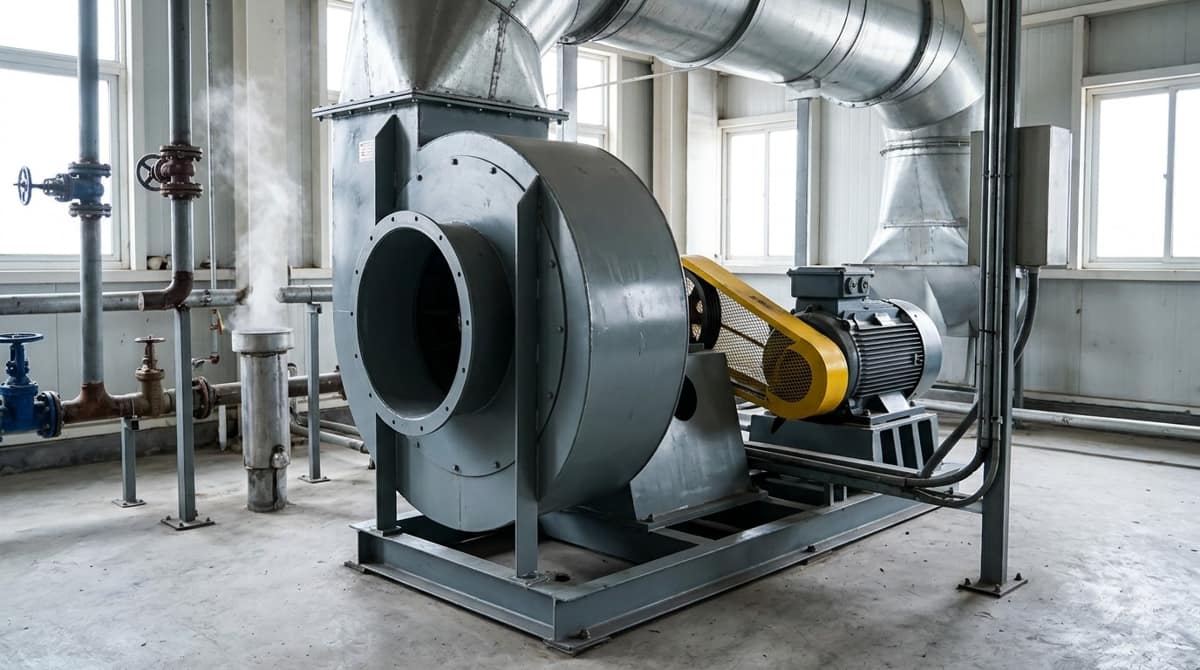
A centrifugal blower is a machine that moves air using a spinning wheel called an impeller. Air enters at the centre of the impeller, gets thrown outward, and leaves through the outlet at a right angle (90°) to where it came in, at higher pressure.
The main parts are the impeller, the scroll-shaped housing (called the volute), the inlet cone, and the motor that drives it. Performance is usually described by airflow, shown in CFM or m³/h, and static pressure, which is the force the blower can push against.
That pressure is what sets it apart from an ordinary fan. An industrial air blower fan can push air through long ducts, filters, scrubbers and bends. A regular fan struggles as soon as there is resistance in the way.
How Does a Centrifugal Blower Work?
The process is simple:
- Air is pulled into the centre of the spinning impeller.
- The blades throw the air outward, which speeds it up.
- The volute housing slows the fast-moving air down and turns that speed into pressure.
- The pressurised air leaves through the outlet and into your duct or system.
Airflow and pressure work against each other. When the system has more resistance, such as a longer duct or a dirtier filter, the blower delivers less air. This is why you should never pick a blower by airflow alone. You need to know how much resistance your system creates.
Main Types of Centrifugal Blower Fans
The shape of the impeller blades decides how a blower behaves. Here is a quick comparison before we look at each type.
| Type | Efficiency | Pressure | Dust Tolerance | Typical Use |
| Forward-curved | Medium | Low to medium | Poor | HVAC, offices, malls |
| Backward-curved | High | Medium to high | Fair | Factory ventilation, dust collection |
| Radial (paddle) | Medium | High | Excellent | Cement, rice husk, wood dust |
| Airfoil | Highest | Medium to high | Poor | Large clean-air systems |
Forward-Curved Blowers
These have many small blades curved in the direction of rotation. They are compact, quiet and usually the cheapest option, which makes them popular for air conditioning units, office ventilation, shopping malls and hospitals.
Their weakness is dust. The small blades collect dirt quickly, and they use more power than other types for the same work. Use them only where the air is clean.
Backward-Curved and Backward-Inclined Blowers
The blades lean away from the direction of rotation. These blowers are efficient and can run all day without overloading the motor, so they are a strong choice for continuous duty.
You will find them in factory ventilation, dust collection systems and boiler draught. For most general industrial jobs in Bangladesh, this is the safest starting point.
Radial (Paddle) Blade Blowers
These have flat, straight blades. They are tough and largely self-cleaning, so they handle abrasive, sticky or heavy dust without clogging.
That makes them ideal for material handling, cement and fly ash, rice mill husk, and wood dust. They are noisier and less efficient than backward-curved types, but when the air is dirty, durability matters more than efficiency.
Airfoil Blowers
Airfoil blowers have blades shaped like an aircraft wing. They are the most efficient type and save the most energy over time, but they only suit clean, large-volume air. You will see them mostly in big power and process plants.
Other Ways Blowers Are Classified
You will also see these terms:
- Single or double inlet: air enters from one side or both sides.
- Direct or belt drive: the motor connects straight to the impeller, or through a belt and pulley.
- High or low pressure: the pressure range the blower is built for.
The next sections explain how these affect your choice.
Common Uses of Centrifugal Blowers in Bangladeshi Industries
Garment and Textile Factories
Lint and fabric dust build up fast in sewing and cutting areas. Centrifugal blowers pull this dust into collection systems and keep the air cleaner for workers. In dyeing and finishing sections, they remove steam and chemical fumes. Some factories also use them for spot cooling on crowded sewing floors.
Ceramic, Glass and Brick Industries
Kilns and furnaces need a steady supply of air for burning fuel properly. Centrifugal blowers provide that combustion air and also help with drying processes. Because the air here is hot and often dusty, material and blade choice matter a lot.
Boilers, Furnaces and ETP Plants
Boilers use blowers for forced draught (pushing air in) and induced draught (pulling exhaust out). In effluent treatment plants, blowers supply air for the treatment process and help move odours and fumes away from the working area.
Food Processing, Agro and Rice Mills
Rice mills use blowers to clean grain, carry husk through pipes and support drying. Food plants use them to keep air moving and hygienic. Clean ventilation protects both workers and product quality.
Cement, Steel, Pharma and Cleanroom Applications
Cement and steel plants rely on blowers for heavy dust collection and process air. Pharmaceutical and cleanroom setups use them to supply filtered air. In these places, you may need special materials, sealed designs or spark-resistant construction, so talk to a specialist before ordering.
Centrifugal Blower vs Axial Fan: Which Suits Your Factory?
Both move air, but they do it differently. An axial blower fan moves air straight through, like a ceiling or wall fan. . A centrifugal blower turns the air and pushes it with more force.
- Pressure: Centrifugal blowers handle much higher resistance.
- Ducts and filters: Centrifugal is the better choice. Axial fans lose power quickly in ducted systems.
- Open spaces: Axial fans move large amounts of air easily where there is little resistance.
- Noise and energy: Axial fans are often cheaper to run in open areas, while centrifugal blowers are more efficient when pressure is needed.
A simple rule: if your air has to travel through ducts, filters or scrubbers, choose centrifugal. If you just need to move lots of air in an open space, a wall-mounted industrial exhaust fan may be enough.
How to Choose the Right Centrifugal Blower
Work through this checklist before you buy:
- Airflow needed: how much air you must move, in CFM or m³/h.
- Static pressure: the total resistance from ducts, bends, filters and equipment.
- Air quality: is it clean, dusty, wet, hot or corrosive? This decides your blade type.
- Blade type: forward-curved for clean air, backward-curved for general industry, radial for heavy dust.
- Material: mild steel, stainless steel, FRP or coated metal, depending on moisture and chemicals.
- Temperature: hot air needs heat-resistant construction.
- Motor power and supply: check the power rating and confirm it matches your supply. Most Bangladeshi factories run on three-phase 400V (380-415V), 50Hz.
- Noise limits: important if the blower sits near workers or offices.
A blower that is too small will run flat out and still fall short. One that is badly matched wastes electricity every hour it runs. With power costs what they are in Bangladesh, a wrong choice can cost far more over time than the blower itself.
A note on safety: If your blower will handle fumes, combustible dust or any explosive atmosphere, do not guess from a blog post. These jobs need properly specified equipment, and a qualified engineer should approve the selection before you order.
Importing and Buying Centrifugal Blowers in Bangladesh
You have two main routes: buy from local stock, or work with an experienced industrial machine importer in Bangladesh to source custom specifications directly. Local stock is faster and good for standard sizes. Direct import gives you more choice and can suit large or custom orders, but it takes longer. Shipments usually arrive through Chattogram port, so plan for transit and clearance time.
Before you commit, check these things:
- Performance curve and test report from the manufacturer, so you know what the blower can actually deliver.
- Warranty terms and what they cover.
- Spare parts availability, especially bearings, belts and impellers.
- After-sales service within Bangladesh.
- Compliance requirements, such as BSTI approval where it applies.
Prices vary widely depending on size, material, brand and motor rating, so any single number you see online is hard to trust. The best way to get an accurate price is to share your airflow, pressure and application details and request a quote. Duty and tax rules also change, so confirm current rates with your clearing agent before ordering.
Installation and Maintenance Tips
A good blower can still perform badly if it is installed poorly. Keep these basics in mind:
- Size ducts correctly. Tight or sharply bent ducts cut airflow.
- Check alignment and vibration at start-up and regularly afterwards.
- Lubricate bearings on schedule.
- Clean the impeller, as dust build-up throws it off balance.
- Check belt tension on belt-drive models.
- Set up a regular inspection routine rather than waiting for a breakdown.
In Bangladesh’s humid climate, use protective coatings or corrosion-resistant materials, and keep motors dry and well covered.
Conclusion
Centrifugal blowers do the hard work of moving air through ducts, filters and dusty, humid factory conditions. The right type depends on your air quality, pressure needs and budget. Forward-curved suits clean air, backward-curved suits general industry, and radial handles the heaviest dust.
If you are unsure which blower fits your plant, contact us for a free selection consultation or a price. Tell us your application, airflow and space, and we will help you choose with confidence.
Frequently Asked Questions
What is the difference between a blower and a fan?
Both move air, but a blower builds higher pressure. That lets it push air through ducts, filters and long pipe runs. A fan moves larger amounts of air at low pressure, usually in open spaces.
Which centrifugal blower type is best for dusty factories?
Radial (paddle) blade blowers handle heavy, abrasive or sticky dust best. For moderate dust with a need for better efficiency, backward-curved blowers are a good middle choice. Avoid forward-curved types in dusty air.
How much power does an industrial centrifugal blower need?
It depends on the airflow, the pressure and the blower’s efficiency. Small units may need under a kilowatt, while large industrial ones need far more. Share your requirements with a supplier to get the right motor size.
Can I get spare parts and service locally in Bangladesh?
Yes, if you buy from a supplier who stocks parts and offers service. Ask before you buy. Make sure bearings, belts and impellers for your model are easy to get, so a small fault doesn’t stop production.