

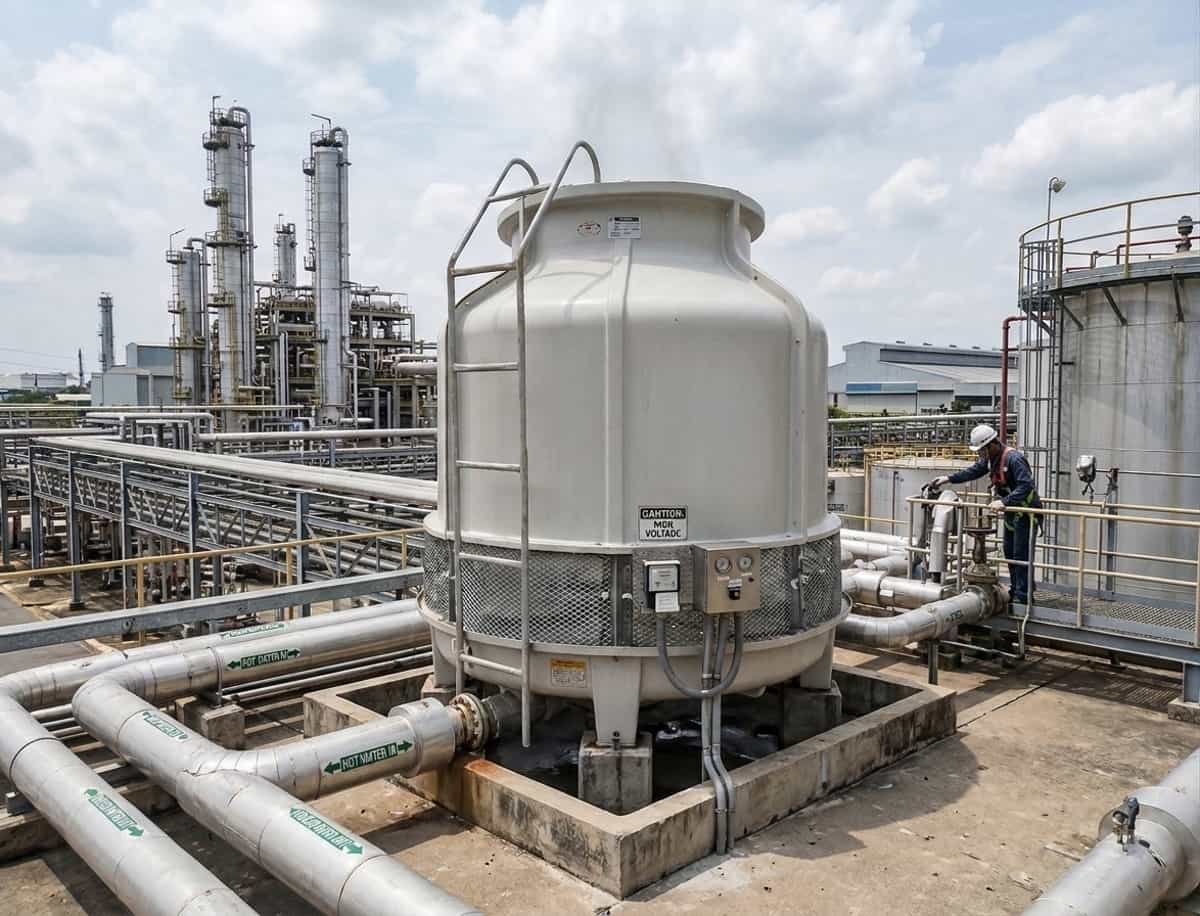
Industrial Cooling Tower Price in Bangladesh

The industrial cooling tower system cost depends on a few things, like the tower’s cooling capacity, type, materials, water flow rate, and installation needs. Many industries, including textile factories, pharmaceutical plants, power plants, and food processing facilities, use cooling towers to remove excess heat and keep their operations running smoothly. Smaller cooling towers usually cost less, while larger systems designed to handle more heat can be much more expensive.
But here’s the thing: the purchase price isn’t the only cost you need to think about. Energy bills, water use, regular maintenance, spare parts, and after-sales support can all add to your expenses over time. Installation conditions and material quality also affect the final price.
Before buying a cooling tower, take a close look at your factory’s cooling needs and budget.
Industrial Cooling Tower Price in Bangladesh at a Glance
Here are typical delivered prices, meaning the tower at your factory gate in Bangladesh, for common sizes.
| Capacity (RT) | Tower type | Typical use | Indicative price (BDT) | Lead time |
| 10-50 RT | FRP round (bottle) type | Small plastics units, small dyeing units, ice plants | 2 – 12 lakh | 2-4 weeks (local stock) to 6-8 weeks (import) |
| 100-300 RT | FRP square / crossflow | Textile mills, food plants, HVAC chillers | 12 – 60 lakh | 6-10 weeks |
| 500+ RT | Large crossflow or field-erected | Steel, pharma, power, large factories | 60 lakh – several crore | 10-16 weeks |
Please note: these figures are indicative. Prices change with the dollar rate, materials and specifications. Always ask for a written quote with a validity date.
One more thing before you compare numbers: a tower that costs 15% less on paper can cost far more over five years in power and repairs.
What Is an Industrial Cooling Tower and Who Needs One in Bangladesh?
A cooling tower removes heat from the hot water that comes out of your machines. The hot water is sprayed over a special material called fill. A fan pulls air through it, and a small part of the water evaporates. That evaporation carries the heat away, and the cooled water goes back to your plant.
Many industries in Bangladesh depend on this:
- Readymade garments and textile dyeing
- Pharmaceuticals
- Food and beverage
- Plastics and injection molding
- Steel re-rolling
- Power plants
- HVAC chiller systems in large buildings
Our climate matters too. Dhaka and Chattogram are hot and humid for much of the year. Humid air takes up less moisture, so towers cool less efficiently here. A tower sized for a dry country will often fall short in Bangladesh.
Types of Cooling Towers and How They Affect Price
The type you choose is the first big step in setting your budget.
FRP Round Bottle-Type (Counterflow) Towers
These are the most common towers in Bangladeshi factories. They are compact, easy to install and sit in the lowest price band. They work well for small and mid-size loads up to about 100-150 RT. The body is made from fiberglass (FRP), so it resists rust, which suits our wet climate.
Square or Rectangular Crossflow Towers
Crossflow towers let air pass sideways through the fill. They are easier to inspect and clean, and you can reach the fill without taking the tower apart. They suit mid-size to large loads and sit in the middle price band. Many textile and food factories choose them for steady, long-hour operation.
Closed-Circuit Cooling Towers
Here, your process fluid flows inside a sealed coil and never touches open air. This keeps the fluid clean, which matters in pharmaceutical and food plants. The price is higher, but you save on water treatment and protect expensive equipment.
Concrete and Field-Erected Towers
These are built on site for very large loads, such as power plants and fertilizer factories. Each one is custom-engineered, so they cost the most and take the longest to build. Most factories will never need one.
Key Factors That Decide Cooling Tower Price
Capacity (RT) and Heat Load
RT means “ton of refrigeration,” the standard way to size a tower. A bigger heat load needs a bigger tower, a larger fan and more fill, and the price climbs with it. Buying too large wastes money. Buying too small means hot water and production problems. Getting the right size is the best way to control cost.
Materials and Fill Type
FRP resists rust and lasts long in humid conditions. Galvanized steel costs less but can corrode sooner. Stainless steel lasts longest and costs the most. For PVC cooling tower infill, PVC film fill cools better but needs clean water, while splash fill is tougher and handles dirtier water.
Fan, Motor and Gearbox Quality
The fan and motor run for many hours every day, so quality matters. A good motor uses less electricity and breaks down less. A weak gearbox can stop your whole line. Ask for the motor brand and efficiency rating before you decide.
Brand and Country of Origin
Chinese towers are usually the most affordable and easy to find. Indian and Korean brands cost more and often come with stronger support. European towers carry the highest price. Compare warranty and spare parts availability, not just price.
Site Conditions
Wet-bulb temperature in Dhaka and Chattogram, the quality of your water, and whether the tower goes on a rooftop or the ground all change the design. Hard or dirty water needs tougher materials and more maintenance.
Installation, Civil Work and Piping
Do not forget the extra costs: a concrete base or steel frame, pipes, valves, electrical connections and crane hire. These often add 10-20% to the tower price. Ask suppliers to list them clearly.
Import Cost Breakdown: From Quote to Factory Floor
A supplier’s quote from abroad is rarely your final cost. Here is where the extra money goes.
Duties and Taxes
Imported cooling towers carry several charges. These include customs duty, regulatory duty, supplementary duty (where it applies), VAT, advance income tax (AIT) and advance tax (AT). Together they can add a large percentage to the invoice value. Cooling towers are commonly classified under HS heading 8419, but your exact code decides your rates. Rates change often, so always confirm the current figures on the National Board of Revenue (NBR) website or with your C&F agent before you sign a contract.
Freight, LC and Port Clearance
Know your price terms. FOB means you pay shipping. CIF includes shipping and insurance up to the port. C&F includes cost and freight. Add LC opening charges from your bank, port handling at Chattogram, and your C&F agent’s fee. Ask your supplier to quote on one basis so you can compare offers fairly.
Lead Time and Documentation
Most imported towers take 4-8 weeks to make and another 2-4 weeks to ship and clear. Keep your commercial invoice, packing list, bill of lading and pre-shipment inspection papers ready. Missing papers cause delays at the port, and delays cost money.
Local Purchase vs. Direct Import: Which Is Cheaper?
| Local purchase | Direct import | |
| Upfront price | Higher | Lower on paper |
| Lead time | Days to 3 weeks | 6-12 weeks |
| Warranty | Easy to claim | Harder to claim |
| Spare parts | Usually in stock | May need ordering |
| After-sales service | Quick | Depends on the supplier |
| Customization | Limited | Full choice |
Our advice: if you need a small tower fast, or your plant cannot afford downtime, buy locally from a trusted importer. If you are planning a large project and have time, direct import can save money, but only if you handle duties, shipping and papers carefully, or work with a supplier who does it for you.
Total Cost of Ownership: Power, Water and Maintenance
The cheapest tower is often the most expensive one to own. Over five years, running costs usually pass the purchase price.
- Power: the fan motor runs for hours every day. With high electricity tariffs and unreliable supply, an efficient motor saves real money.
- Makeup water: cooling towers lose water through evaporation, so you must keep refilling them. Good drift eliminators reduce this loss.
- Chemicals: water treatment stops scale, algae and corrosion.
- Fill replacement: fill usually needs changing every 5-8 years, sooner with poor water.
When you compare quotes, ask for the motor power in kW and the expected maintenance schedule. A slightly higher price today can lower your yearly bills.
How to Size and Choose the Right Cooling Tower
Quick Sizing Logic
Sizing depends on three things: how much water flows through your system, how much you need to cool it (the range), and how close you can get to the outside wet-bulb temperature (the approach).
A rough example: if 100 cubic meters of water per hour must cool from 37°C to 32°C, that is a 5°C range. The heat load is about 100 × 5 = 500 Mcal/hour, which is roughly 165 RT. Always follow a step-by-step cooling tower capacity calculation and ask your supplier to confirm the final design for your local wet-bulb conditions. .
Selection Steps
- Define your process load. Know your flow rate and temperatures.
- Collect site data. Note your location, water quality and available space.
- Choose the tower type. Match it to your load and budget.
- Compare three quotes. Look at specifications, not just price.
- Ask for a performance guarantee. The supplier should state in writing that the tower will meet the design temperatures.
Taking these steps in order helps you avoid costly surprises after delivery.
Questions to Ask Before You Buy
Before you place an order, ask every supplier:
- Is the tower’s performance guaranteed in writing?
- How long is the warranty, and what does it cover?
- Do you keep spare parts in Bangladesh?
- Who handles installation and commissioning?
- Can you show reference projects in Bangladesh?
- What are your payment terms?
- What materials and fill types do you use?
- What is the exact delivery timeline?
A good industrial cooling tower system supplier in Bangladesh answers these clearly and puts the answers on paper. If someone avoids these questions, think twice before paying an advance.
Conclusion and Call to Action
Three things decide what you pay for a cooling tower in Bangladesh: the right size for your heat load, the type and material you choose, and the true cost of import and installation. Look beyond the lowest price. Check the motor, the warranty and the support you will get after delivery.
Ready to compare options? Explore our full range of industrial cooling equipment or contact Seraphic Associate for a free quote. Tell us your flow rate and temperatures, and we will suggest the right tower.
Frequently Asked Questions
What is the price of a 100 RT cooling tower in Bangladesh?
A 100 RT FRP cooling tower usually costs about BDT 12-22 lakh, depending on brand, motor and fill. Installation and civil work cost extra. Ask for a written quote with a validity date.
Is FRP or steel better for Bangladesh’s climate?
FRP is usually the better choice. Our humid, wet weather rusts steel faster, while FRP resists corrosion and needs less upkeep. Stainless steel also lasts well but costs more.
How long does it take to import a cooling tower?
Most imports take 6-12 weeks from order to delivery. That includes manufacturing, shipping, port clearance and transport. Large custom towers can take longer.
How much import duty applies to cooling towers?
Total tax depends on your HS code and the current rates for customs duty, VAT, AIT and other charges. These change often, so confirm with NBR or your C&F agent before ordering.
How often should cooling tower fill be replaced?
Usually every 5-8 years. Poor water quality, scale or algae can shorten this, so inspect the fill every year.