

How to Choose the Right Wall Mounted Axial Fan for Industrial Use in Bangladesh

Anyone who has entered a textile stitching floor in Narayanganj, or a storage facility in Gazipur within the summertime season understands that sensation: stagnant air, humidity coating your dopamine skin, and groups of workers wherein human beings can not get their heads into the work because it’s simply too hot. Proper ventilation is not a luxury in a hot and humid country like Bangladesh where both temperature and humidity are high throughout most of the year. Basic necessity to have a safe, productive and comfortable workspace.
Unfortunately, many of which end up purchasing the wrong fan for their plant. Our way of using it may be too weak for the room, too strong and burning uprated electricity, not going to last past a year because used in a dusty humid Bangladesh. This guide is based on that very experience, our work with factories, warehouses, and workshops across the country fixing this exact problem.
What Is a Wall Mounted Axial Fan?
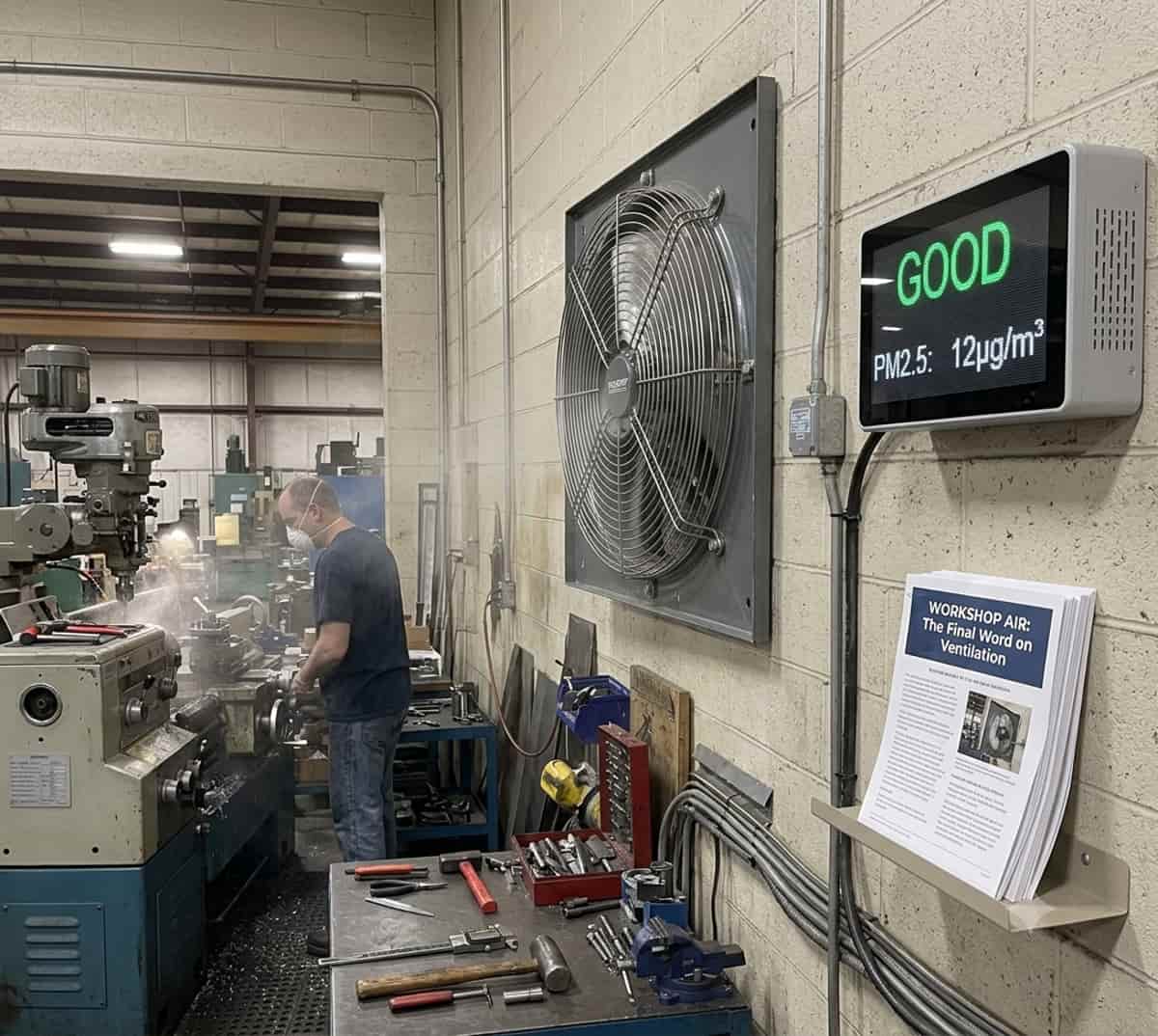
The wall mounted axial fan is a large dimension fan directly supporting the motor on mounting platess and used for high flow applications with straight line movement, like household exhaust with much higher capacity. It is meant to blow a volume of air fast across an area of space.
Wall-mounted axial fans have benefits including better airflow, better ventilation, and faster removal of heat, smoke, dust, and stale air from industrial settings. They are also an energy-efficient and space-saving solution, making them ideal for factories, warehouses, workshops, and other commercial establishments in Bangladesh.
This is different from a centrifugal fan that releases air at an angle which makes it best used with ducted systems, as well as from a roof turbo ventilator where the hot or wind force feed air through via the roof. The wall mounted axial fan is more convenient, easier to install, and provides immediate, direct airflow at floor or working level – which is precisely what most factory floors require.
These fans are usually used in garment factories, warehouses and poultry sheds, factory workshops with large flows of air must be moved quickly through an open production area.
Common Industrial Applications in Bangladesh
Wall mounted axial fans are seen in almost every industrial environment and for very good reasons they are cost-effective, simple to service and quite efficient when it is possible to replace air rapidly in large spaces with a high ceiling.
They are particularly important for the many garments and textile factories that depend on them to keep large sewing floors cool, and to dissipate heat generated by machines and lighting. They are being used at warehouses and cold storage entry points to avoid heat buildup in places near the loading docks and ensure air circulation around retained goods. Livestock at poultry farms and agro-processing units depend on robust, continuous airflow best to maintain animal health and control odour and humidity. These are the fans required for clearing up fumes, heat and dust building up rapidly in dyeing units, general workshops and factories manufacturing plastic or rubber.
Does your business fall into one of these categories? If so, chances are that a wall mounted axial fan is already in your installation or if not, it should be.
Key Factors to Consider Before Buying
Airflow Capacity (CMH/CFM) vs Room Size
This is the single most important factor, and it’s the one most buyers get wrong. Airflow capacity, measured in CMH (cubic meters per hour) or CFM (cubic feet per minute), tells you how much air the fan can move. A fan that looks powerful but isn’t rated for your floor size will leave you with hot, stuffy corners no matter how long it runs. Before buying, calculate your floor area and ceiling height, and ask your supplier to recommend a fan (or a number of fans) rated to fully turn over the air in that space several times an hour.
Motor Type & Power Consumption (Energy Efficiency)
With electricity costs a real concern for every factory owner in Bangladesh, the motor inside the fan matters just as much as the blades. Look for fans with energy-efficient, IE-rated motors. They cost a little more upfront but run cooler, last longer, and can meaningfully lower your monthly electricity bill when the fan is running for 10–12 hours a day, every day.
Blade Material & Corrosion Resistance
The heat and humidity of Bangladesh, coupled with the dust and fumes in many factories, is hell on cheap materials. Low-quality plastic or thin metal blades on fans warp, rust, or crack within months. Seek blades made of galvanized steel, powder-coated metal or durable engineering plastic built to withstand years of corrosion and humidity damage.
Noise Level (dB Rating)
An unnecessarily loud fan presents its own issues it complicates the messaging on the factory floor and can even contribute to worker fatigue throughout an entire shift. Before making your purchase, refer to the decibel (dB) rating, especially if the fan will run near areas of an office or quality control where clear communication and focus are important.
IP Rating & Weatherproofing
Numerous manufacturing facility sheds in Bangladesh open to outside rain, dirt as well as exterior humidity. IP (Ingress Protection) rating helps you understand how well the motor and electrical elements of that fan are sealed against water and dust. For semi-open or outdoor-facing installations, it’s IP rating or bust a fan without an appropriate IP rating tends to make it through five years instead of five months.
Voltage Compatibility with Local Power Supply
Bangladesh’s industrial power supply includes both 220V single-phase and 3-phase connections, and voltage can fluctuate, especially outside major cities. Before ordering, confirm the fan’s voltage and phase requirements match your factory’s electrical setup, and check whether it can handle minor voltage fluctuations without damage.
Wall Mounted vs Other Fan Types – Quick Comparison
Industrial ventilation fans are designed to move large volumes of air. They help control heat, humidity, dust, fumes, and stale air in factories, warehouses, and production facilities. The right type of industrial fan depends on your building layout, airflow requirements, installation space, and budget.
| Fan Type | Best For | Installation | Relative Cost |
| Wall Mounted Axial Fan | Open factory floors, warehouses, workshops | Easy, mounted directly on wall | Low to moderate |
| Exhaust Fan | Small rooms, kitchens, restrooms | Easy, smaller opening needed | Low |
| Roof/Turbo Ventilator | Heat removal through the roof, passive ventilation | Requires roof installation | Moderate |
| Centrifugal Fan | Ducted systems, industrial exhaust lines | Complex, often needs ductwork | High |
For most open-plan factory floors and warehouses in Bangladesh, a wall mounted axial fan hits the sweet spot it’s affordable, quick to install, and moves air directly where people are working, without the added cost and complexity of ductwork.
Installation & Placement Best Practices for Bangladeshi Factory Layouts
Choosing the best fan is just part of the job, as where and how to install it makes a big difference. Place them on opposite walls so fresh air is sucked in on one end and pushed out at the other, and you get a gust of fresh air that runs across an entire floor, rather than just cooling down one corner.
Mounting height matters too. However, fans placed high will often just blow air over the workers’ heads rather than into the breathing zone and fans low can susept air stratification. An easy mistake in many local factories is installing fans huddled up too close together so they practically fight each other, or placing them where machinery, products piled high or partitions completely obstruct the airflow path. Breezing through your floor plan with your supplier ahead of installation can avoid such expensive miscalculations when it comes to layout.
Safety, Compliance & Certification Checklist
Industrial fans operate in hours a day and wired to your factory’s electric system, safety is not something you want to skimp on. When buying, check also if the fan has relevant compliance marksCE or ISO certification for imported units where applicable and compliance with relevant BSTI (Bangladesh Standards and Testing Institution) requirements.
Electrical safety is equally important. A fan motor with poor wiring or insulation is a real fire hazard, especially in factories with dust, lint or combustible materials nearby. This is one of the major reasons to buy from an authorized, licensed importer as opposed to a verified reseller confirming that a reputable supplier can provide you with appropriate supporting documentation, test certificates and post-sale support should anything go wrong. With your workers’ safety and the compliance record of your factory on the line, it’s not worth chancing cutting corners here.
Maintenance Tips to Extend Fan Lifespan
A quality fan can happily hang around for years, so long as you treat it decently, but the dust and humidity of Bangladeshi air make this maintenance an active rather than passive consideration. A regular cleaning schedule preferably on a monthly basis, as lint and fabric dust quickly collect on blades and motor housings in textile and tailoring factories prevents overheating and blade imbalance. Dust and organic debris are equally an issue in any agro-processing or poultry set up.
Bearings need to be inspected and lubricated regularly, especially if the grinding or rattling sound occurs as this signifies impending wear and blades should also be checked for balance, where even minute warping can create a burden on the motor in long run. Also, since voltage often fluctuates in Bangladesh and power is sometimes cut off, be on the lookout for motor stress overheating or burning smell, slower start-up than normal as they usually indicate electrical strain rather than wear.
Price Range & What Affects Cost in the Bangladesh Market
Wall mounted axial fans price in Bangladesh is one of the crucial components in understanding why it should guide pricing such that you do not pay significantly more, nor confirm failure to learn and regret not paying significantly less. Brand origin is important: Overheads for fans from major international manufacturers or reputable Chinese brands with proper quality control tend to be higher than for generic, locally assembled units but they often last many moons longer.
Motor quality, blade size and IP rating also increase the cost. You can get a simple fan for a smaller shop for much less than a big, high-CFM weatherproof model suitable for an industrial-size warehouse. Generally speaking, the cheapest solution available in the market is seldomly the most cost-effective when you add electricity consumption, frequency of replacement and downtime in the equation. It makes more sense to compare fans on a cost per year of expected use basis rather than on the sticker price.
How to Choose a Reliable Supplier/Importer in Bangladesh
The value of a fan is only as good as the company standing behind it. Before you buy, check that the seller can provide a straightforward warranty and question what will happen if the motor malfunctions during that particular time frame. Get them to tell you whether spare parts blades, motors, capacitors are genuinely available locally; imported fans may have no support for local parts and your waiting weeks for a simple repair.
A reliable industrial machine supplier should additionally provide unparalleled installation advice or help, and give you immediate import documentation as well as certification so that you know exactly what you are getting, and the solution meets safety standards. When finally selecting a supplier, usually the distinguishing factor between an effortless five-year experience and one wrought with difficulties is your vetting process, not just for the product.
Conclusion
Before you purchase a fan, if you’re uncertain about which one fits your particular space, it pays to have a quick recommendation based on your floor size and industry it’ll save you in the long short term from making an expensive mistake.
The selection of the proper wall mounted axial fan may really be reduced to three fundamental checks: the suitable airflow for your environment, a long lasting motor and blade material that match the climate of Bangladesh, adequate safety certification, and a supplier you can rely on post sale. Get these right and you have a factory floor that is cooler, safer and more productive for years.
Frequently Asked Questions
What size wall mounted axial fan do I need for a 5,000 sq ft factory?
It depends on your ceiling height and how many air changes per hour you need, but as a starting point, most 5,000 sq ft factory floors need multiple large-capacity fans working together rather than a single unit. A supplier can calculate this based on your exact floor plan.
Can wall mounted axial fans work during load-shedding or power fluctuation?
Standard fans can be damaged by sudden voltage spikes during power restoration. Look for models with built-in overload protection, or pair your fans with a stabilizer if your area experiences frequent fluctuations.
What’s the average lifespan of an industrial axial fan in Bangladesh’s climate?
With good build quality and regular maintenance, a well-chosen fan can last 5–8 years. Cheaper, poorly sealed units in humid or dusty environments often fail within 1–2 years.
Is a wall mounted axial fan enough for high-heat processes, or do I need an exhaust and fresh air combo?
For very high-heat processes like dyeing or metalworking, axial fans alone may not be enough. Combining them with dedicated exhaust systems for fresh air intake usually gives better results.
Where can I buy certified industrial axial fans in Bangladesh?
Look for licensed importers who can provide certification documents, warranty terms, and local after-sales support, rather than unverified resellers offering no paperwork or service guarantee.