

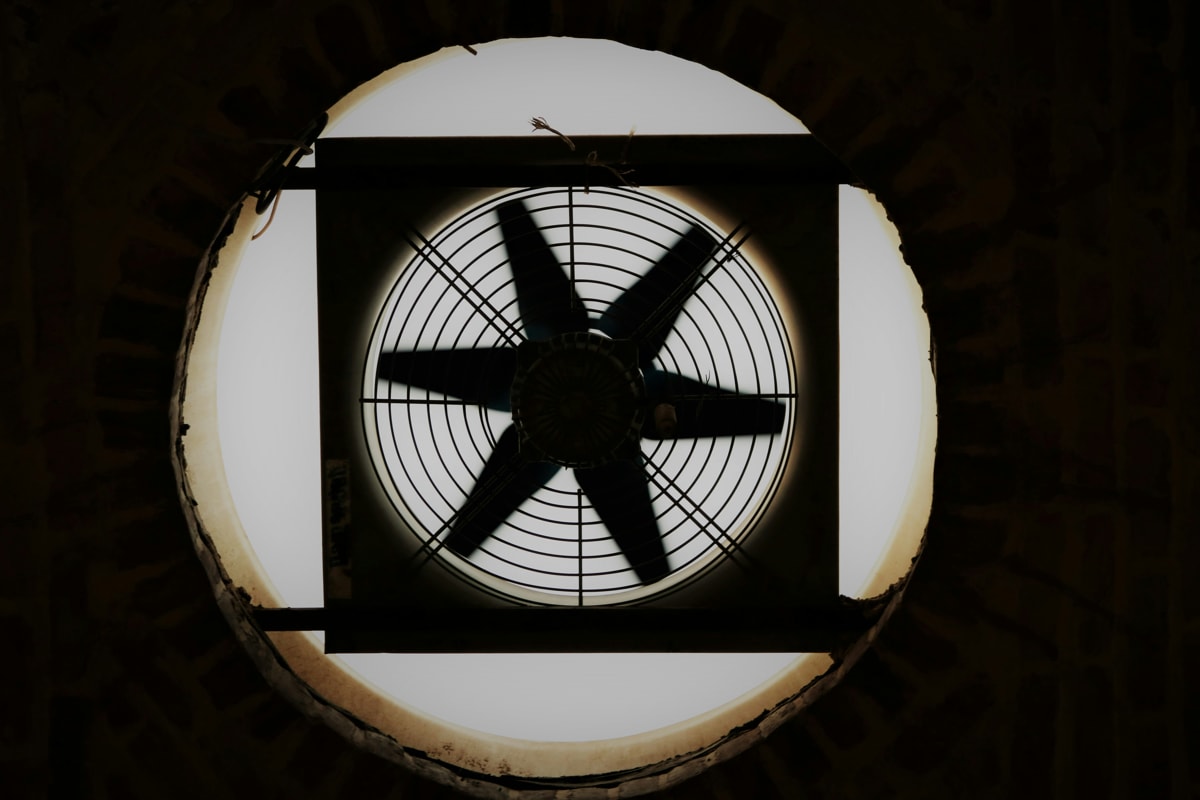
What Are the Benefits of Using a Wall Mounted Axial Fan?

Walk into any garment factory floor in Bangladesh during April or May, and you’ll feel it immediately that thick, still heat that makes workers slow down and machines run hotter than they should. Poor airflow isn’t just uncomfortable. It cuts productivity, damages sensitive equipment, and drives up sick days on the factory floor.
This is one of the most common problems factory owners and facility managers bring to us when they’re looking for a ventilation solution. Time and again, the wall-mounted axial fan comes up as one of the simplest, most reliable fixes.
What Is a Wall Mounted Axial Fan?
An axial fan that is wall-mounted is a fan that is mounted directly to a wall and blows or pulls air in a straight line, parallel to the fan shaft, much like a ceiling fan blowing air straight down, except it blows air straight across a room.
This is differene between exhaust and centrifugal fan, which pulls air in and throws it out at an angle, usually through ducts. It’s also different from a standard exhaust fan, which is mainly built just to pull stale air out of a room. A wall-mounted axial fan can do both: pull in fresh air or push out hot, stagnant air depending on how it’s installed and set up.
Because it’s mounted on the wall rather than the ceiling or floor, it doesn’t take up any usable floor space, which is exactly why it’s become such a popular choice in factories, workshops, and warehouses across Bangladesh.
Need-to-Know Benefits of Wall-Mounted Axial Fans
Large-Volume Air Circulation
The biggest benefit of a wall-mounted axial fan is simple: it moves a lot of air, fast. Because the blades blow air directly in a straight line, these fans can move massive amounts of air across a whole factory floor or warehouse in minutes. This is especially important in rooms with high ceilings and open floor plans, where hot air naturally rises and collects in the corners. A wall-mounted axial fan doesn’t just mix the air around it; it actually moves it from one side of the room to the other, displacing the hot, stale air with cooler air from outside the building or from a different part of a building. For factory floors packed with workers and machinery, this kind of steady, large-scale air movement makes a noticeable difference within minutes of switching it on.
Energy Efficiency and Lower Electricity Costs
With electricity costs being a real concern for most Bangladeshi factory owners, energy efficiency isn’t optional it’s a deciding factor. Wall-mounted axial fans are built with simple, direct-drive motors that don’t need to work as hard as centrifugal fans or full HVAC systems to move the same amount of air. This means lower power draw for the same cooling effect. Many factory owners find that switching a section of their facility from air conditioning to axial fans during the hotter months cuts their electricity bill noticeably, without making working conditions unbearable. Over months and years of daily use, that difference adds up to real savings money that can go back into the business instead of the power bill.
Compact, Space-Saving Wall Installation
Floor space in a factory is valuable, and every square foot taken up by equipment is a square foot not being used for production. Because these fans mount directly onto the wall, they don’t eat into your walkways, storage areas, or production lines. There’s no need to clear space on the floor or worry about a fan getting knocked over or damaged by forklifts and moving carts. Axial fans mounted on the wall are a practical choice for smaller workshops and tightly packed garment units where every inch of floor space is already accounted for. You get strong airflow without giving up any usable space in return.
Better Air Quality and Cooling Accumulated heat in a factory can cause discomfort, but also impact focus, create fatigue, and lead to more mistakes or accidents on the floor. A wall mounted axial fan can help by constantly drawing out the hot, humid air and replacing it with fresher air from outside. This constant air exchange also helps eliminate dust, fumes and odors that build up around machinery, sewing stations or storage areas. For workers who are on the floor for eight or more hours a day, this kind of constant air flow makes the environment noticeably more comfortable and easier to work in, which tends to translate into better focus and fewer complaints.
Simple to Care For and Extended Durability
Factory owners prefer axial fans because they are very low maintenance after installation. Their uncomplicated mechanical design – a motor, a shaft, and blades – reduces the number of parts that can malfunction or fail. Typical routine maintenance includes cleaning the blades and occasional motor checks, without requiring special servicing. Designed to withstand non-stop daily use in dusty and humid industrial environments, a well-made wall-mounted axial fan can work reliably for years with minimal or no interruption, which is imperative for a factory that cannot afford to halt production for repairs.
Cheaper than HVAC Systems
Installing a full air conditioning or HVAC system across a factory floor is costly both in terms of initial outlay and ongoing running and maintenance. Wall-mounted axial fans provide a much cheaper alternative for areas that need strong ventilation but don’t require temperature-controlled cooling. The initial investment is considerably less, installation is quicker and easier, and there is no requirement for ductwork or complex wiring. For many factories and warehouses in Bangladesh, the use of a few strategically located wall-mounted axial fans provides comfortable and breathable working conditions at a fraction of the cost of an HVAC system.
Where are wall-mounted axial fans used in Bangladesh?
Wall-mounted axial fans have now become a familiar sight in many industrial and semi-industrial locations across Bangladesh. They are commonly found on garment and RMG factory floors where hundreds of workers and rows of sewing machines generate heat throughout the day. Warehouses storing goods, raw materials, or finished products also use wall-mounted axial fans to prevent heat and humidity from damaging stock.
These fans are used in poultry sheds and agro-processing units to control temperature and reduce ammonia accumulation in agriculture. This directly affects the health and productivity of livestock. Workshops, whether metalworking, woodworking, or vehicle repair, use them to clear out fumes, dust, and heat generated by machinery and welding work.
Tin-shed industrial units, which are extremely common across Bangladesh’s smaller manufacturing hubs, benefit especially well from wall-mounted axial fans. These buildings have a tendency to trap heat under their metal roofing, and a strategically placed fan can make a dramatic difference in keeping the space workable during peak summer months. Across all of these settings, the common denominator remains the same: large, open spaces that require reliable airflow without the expense or complication of a full cooling system.
How to Choose the Right Wall-Mounted Axial Fan
Choosing the right wall mounted Axial fan is not just about size; it’s about matching the fan to your specific space and needs. Here’s what to look for before making a decision: Airflow capacity (CFM or m³/hr): This tells you how much air the fan can move. Larger spaces with higher ceilings need fans with higher airflow ratings to circulate air effectively across the whole area.
Blade Size: Bigger blades will push more air with less stress on the motor, but they also need more wall space and clearance. Choose a blade size that matches the size of your room and the wall you are hanging it on.
Motor power: A more powerful motor will move air more efficiently and generally hold up better under continuous, all-day use which is the kind of use you’ll get in a working factory.
Dust and humidity IP rating: In Bangladesh’s climate, dust, humidity, and sometimes direct exposure to moisture are common in industrial settings. Search for a fan with an appropriate IP rating so it holds up over time instead of wearing out early.
Noise level: Some axial fans are louder than others and this is important if you have workers close to the fan already or if noise is a consideration for your day-to-day operations.
Single-phase vs. three-phase power: Power supply arrangements are not the same across the board in Bangladesh, so this is a critical consideration. Big high-power fans usually run on three-phase power, while the smaller fans tend to be single-phase connections. Be sure to verify your facility’s electrical arrangements before selecting a fan to make installation easier.
By matching these factors to your particular space, you will avoid buying a fan that is either underpowered for the job or larger and more expensive than you actually need.
Installation & Safety Considerations
When installing a wall-mounted axial fan, it’s worth checking a few basics to make sure everything runs safely and holds up over time. The wall you’re mounting it on needs to be strong enough to support the fan’s weight, especially for larger industrial models; brick or concrete walls are generally more reliable than lighter partition walls.
The height of the mounting is also important. Fans are generally mounted high enough to be unobtrusive to workers and equipment but low enough to ensure good air circulation in the room. Proper positioning of the height of the fan is critical to how well the airflow reaches the most needed areas.
For the electrical side, it is best to have a qualified electrician who is experienced in industrial environments and specifically with three-phase power do all of the wiring. Proper grounding and circuit protection is critical, not only for the safety of your team, but also for the longevity of the fan. If you have any doubt about the installation process, have a professional check the setup before you put the fan into regular use.
Conclusion
A wall-mounted axial fan offers a cost-effective and functional solution to one of the most common problems in Bangladeshi factories and warehouses, ensuring air continues to flow in large, hot, and often enclosed environments. With benefits such as lower electricity bills, space-saving installation, and minimal maintenance, it presents a solution that integrates well into the everyday needs of local industrial workspaces. If you are exploring ventilation options for a factory, warehouse, or workshop floor, it is worth reach out to a reputable supplier who can guide you in choosing the right fan for your unique space and power setup.
Frequently Asked Questions
What is the price range of wall mounted axial fans in Bangladesh?
The prices depend on size, motor power and brand. They can be as low as relatively affordable for small workshops to expensive industrial models designed for large factory floors. It’s best to compare a few suppliers and match pricing to your specific airflow and durability needs.
Can a wall mounted axial fan replace an exhaust fan?
Yes, a wall mounted axial fan can often be used instead of an exhaust fan. It can draw in fresh air and expel hot or stale air, so it can usually do the job of a standard exhaust fan as well as help with overall air circulation.
How much electricity does a wall mounted axial fan use ?
Power consumption is a function of the motor size and how many hours the fan is used each day . However , axial fans are usually much more energy efficient than air conditioning or the entire HVAC system , making them a cost effective option for continuous industrial use .
What fan size do I need for a mid-size factory floor?
That depends on the size of the room and the height of the ceiling, but mid-size factory floors usually require fans with a higher airflow rating and larger blade diameter to effectively circulate air throughout the entire space. A supplier can help you calculate the right size based on your floor plan.
Do wall mounted axial fans work well in humid environments?
Yes, if the fan is rated with a suitable IP rating for dust and moisture resistance. This is particularly important in Bangladesh’s climate where humidity and dust are a staple of most industrial environments.