

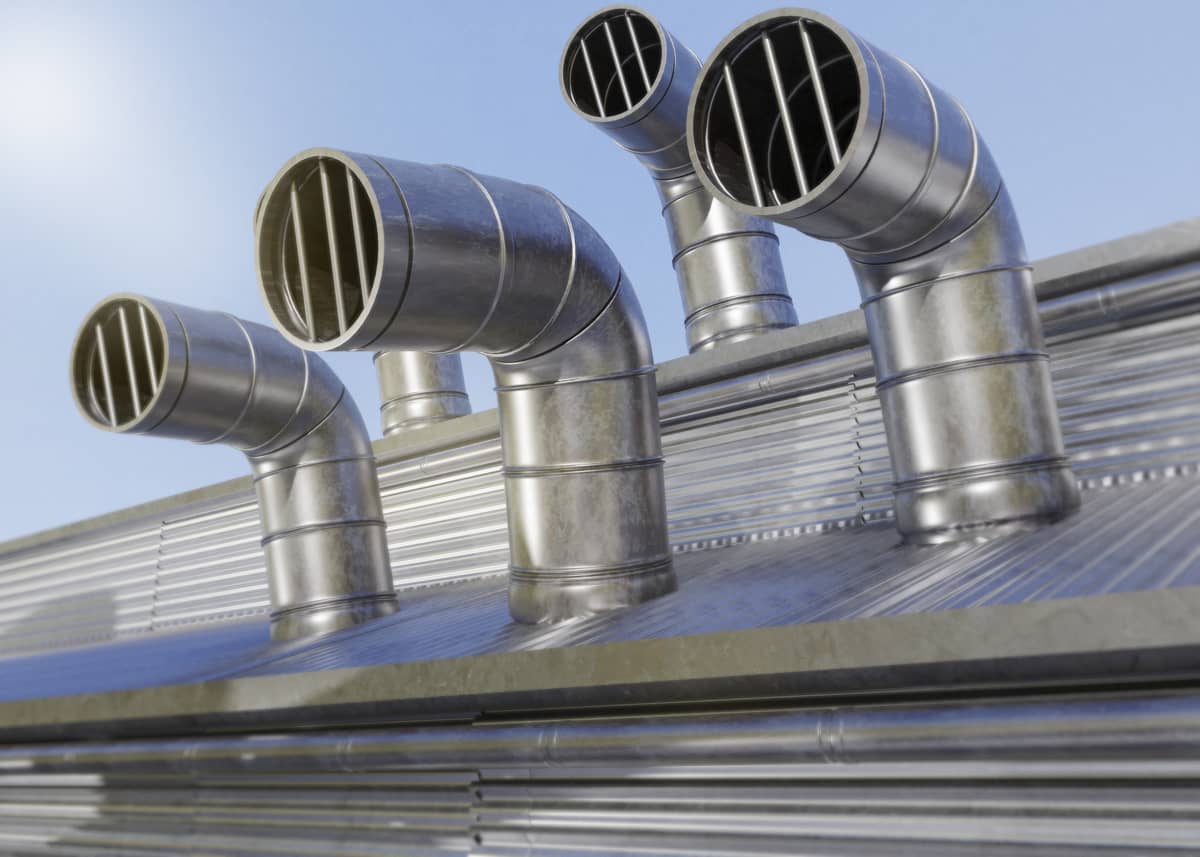
Round Duct for Garments Factories in Bangladesh: Benefits and Uses

Walk onto almost any sewing floor in Bangladesh during peak production, and you’ll notice the same three things: the heat, the fine layer of lint settling on machines and workers, and somewhere overhead, a duct system working overtime to pull all of it out. If that system isn’t doing its job well, you feel stuffy air, dust building up faster than it should, fans straining louder than they need to.
This is exactly why more factory owners and facility managers across Bangladesh’s RMG sector are moving away from old-style rectangular ducting and specifying round duct instead. It’s not a trend for the sake of it. Round duct solves specific, everyday problems that come with running a garment factory in this climate, in these buildings, with this much lint and dust in the air.
What Is Round Duct and Why Garment Factories Use It
Round duct, sometimes called spiral duct, is exactly what it sounds like: a cylindrical air channel, usually made from galvanized iron (GI) sheet, formed into a continuous spiral seam rather than the flat, joined panels used in rectangular ducting. That single design difference no corners, no flat seams is the reason it behaves so differently once it’s installed on a busy factory floor.
In a garment factory, this same round ducting shows up in more places than most people realize. It’s the line pulling lint and fabric dust away from cutting tables. It’s the exhaust run venting heat out of the boiler or generator room. It’s part of the cooling and ventilation system moving air across long sewing lines. If your factory has anything that needs to move air clean air in, dusty or hot air out there’s a good chance round duct is either already doing that job or should be.
Key Benefits of Round Duct in RMG Facilities
Better Airflow with Less Resistance
The air doesn’t like corners. Every sharp turn or flat seam in a rectangular duct creates a small point of friction, and over a long run, say, from one end of a sewing floor to the other those small points add up to real resistance. The round duct’s smooth, continuous interior lets air move with far less drag. In practical terms, that means your exhaust and cooling fans don’t have to work as hard to move the same amount of air, which translates into steadier airflow across the floor and less strain on the fan motors over time.
Lint and Dust Control and Why It Matters for Fire Safety
This is where round duct earns its reputation in the garment sector specifically. Cotton lint and fabric dust are lightweight and drift easily, but they also love to settle and they settle fastest in corners, seams, and joints, which is exactly where rectangular ducts have the most surface for buildup. Over weeks of continuous production, that buildup becomes a genuine fire risk, since lint is highly flammable and often invisible until it’s a real problem.
The round duct’s smooth interior gives lint far fewer places to collect. Air keeps moving it along instead of letting it settle. Given how seriously fire safety is taken across the RMG sector under BNBC guidelines and BGMEA-driven compliance expectations, this alone is often reason enough for facility managers to make the switch not because a rectangular duct is unsafe by default, but because a well-designed round duct system removes one more avoidable risk from the floor.
Space and Structural Efficiency
Anyone who has tried to retrofit ventilation into an older factory building knows the real constraint usually isn’t the fan or the filter it’s the ceiling clearance. A round duct delivers the same airflow capacity in a smaller footprint than an equivalent rectangular duct, which makes it far easier to route through tight overhead spaces without cutting into usable floor height. For factories working with existing buildings rather than purpose-built facilities, this is often the deciding factor.
Lower Installation and Long-Term Cost
A round duct uses less material to cover the same surface area, and spiral fabrication is naturally faster than folding and joining flat panels. Fewer joints also means fewer places that need sealing, and fewer places that can eventually leak or need maintenance. For a facility manager, that’s less installation time up front and less recurring maintenance labor down the line, both of which matter more than the sticker price of the ducting itself.
Built to Handle Bangladesh’s Climate
Between the humidity, the dust load from cotton and synthetic fibers, and the heat most factory floors run at, ducting material takes a real beating here. Good-quality GI sheet round duct, in the right gauge, holds up well against this combination corrosion resistance from the galvanized coating, and enough structural rigidity to handle the vibration from nearby machinery and fans without warping over time. Cutting corners on gauge thickness to save on upfront cost is one of the most common regrets factory managers mention after a year or two of use.
Where Round Duct Is Used Inside a Garment Factory
Dust Collection Systems on Cutting and Sewing Floors
This is the most visible use pulling fabric dust and lint away from cutting tables and sewing stations before it settles on machines, products, or workers. A well-routed round duct system here directly affects both air quality on the floor and how often machines need cleaning and servicing.
Exhaust for Boiler and Generator Rooms
With load-shedding still a reality for many factories, generator rooms run for extended stretches and generate serious heat. A round duct is commonly used to vent that heat and exhaust fumes out efficiently, keeping the equipment room from becoming a hazard in its own right.
General Ventilation and Cooling Distribution
Beyond dust and exhaust, a round duct also carries conditioned or circulated air across long production lines, helping keep temperatures more even from one end of the floor to the other, something workers on the far end of a long sewing line notice immediately when it’s missing.
Compressor and Utility Line Ducting
Compressors and other utility equipment also need dedicated air handling, and round duct is a common choice here too, for the same reasons as everywhere else in the factory: efficient airflow in a compact footprint.
Specifications to Check Before Buying Round Duct
Not all round ducts are built the same, and the differences matter once it’s installed. A few things worth checking before you commit to a supplier or a batch:
- Gauge (thickness): Thicker gauge GI sheet costs more upfront but holds up far better under continuous vibration and humidity. Match the gauge to how demanding the application is, exhaust and dust lines generally need heavier gauge than light general ventilation runs.
- Diameter sizing: This should be based on your fan’s actual CFM (airflow capacity) and the distance and layout of the run, not just copied from another factory’s setup. Undersized duct is one of the most common installation mistakes, and it quietly reduces airflow efficiency for the life of the system.
- Material GI sheet vs. aluminum: GI sheet is the standard choice for most factory applications due to cost and durability; aluminum is lighter and sometimes used where weight or corrosion resistance is a bigger priority, at a higher cost.
- Fittings: Elbows, tees, and reducers all affect airflow at the points where they’re used. Poor-quality or mismatched fittings can undo a lot of the efficiency benefit of the duct itself.
Installation and Maintenance Considerations
Even good duct performs poorly if it’s installed carelessly, and a few mistakes show up again and again in Bangladeshi factory installations: runs sized too small for the fan driving them, joints sealed inconsistently (which leaks conditioned or filtered air before it reaches where it’s needed), and no thought given to cleanout access points for lint removal down the line.
Once installed, a simple maintenance routine goes a long way: periodic interior cleaning to clear lint buildup before it becomes a fire risk, and regular inspection of joints and fan connections for wear. Factories that build this into a routine maintenance schedule tend to avoid the bigger, more disruptive fixes later.
Cost Factors for Round Duct in the Bangladesh Market
A few factors drive most of the price difference between quotes: the gauge and grade of material used, the total diameter and length needed for the job, whether the duct is fabricated locally or brought in as ready-made imported sections, and how many fittings the layout requires. As a general rule, paying slightly more for the right gauge and proper fabrication upfront tends to cost less than dealing with premature wear or airflow problems later.
Choosing a Round Duct Supplier for Your Factory
Since so much of a round duct’s performance comes down to correct sizing and quality fabrication, the supplier matters as much as the material itself. Worth checking before you commit: whether they can fabricate to your specific factory’s measurements rather than offering only standard sizes, whether they offer on-site measurement and installation support, where their material is sourced from, and whether they stand behind the work with after-sales support if you need adjustments or a retrofit later.
At Seraphic Associate connected industrial supply partners, this kind of factory-specific fabrication and installation support is standard practice because a duct system that’s a close fit for your actual floor layout will always outperform one that’s simply the closest standard size available.
The Bottom Line
Round duct isn’t a complicated upgrade, but it solves real, everyday problems that Bangladeshi garment factories deal with constantly heat, lint, tight ceiling space, and the fire risk that comes with cotton dust buildup. Getting the sizing, gauge, and installation right matters more than the ducting itself, so it’s worth working with a supplier who understands garment factory conditions specifically, not just general HVAC work.
If you’re planning a new installation or considering a retrofit, getting your floor layout assessed before you buy is the single best step you can take to avoid the most common and most expensive mistakes.
Frequently Asked Questions
Is a round duct better than a rectangular duct for garment factories?
For most garment factory applications dust extraction, exhaust, and general ventilation round duct offers better airflow efficiency, easier lint clearance, and a smaller footprint, which is why it’s become the more common choice in newer installations and retrofits alike.
What gauge of GI sheet is used for factory round duct?
This depends on the application. Lighter general ventilation can use a lighter gauge, while dust extraction and exhaust lines that see more wear and vibration typically need a heavier gauge for durability.
Does round duct help reduce fire risk from lint buildup?
Yes, its smooth interior gives lint far fewer places to collect compared to the corners and seams of rectangular duct, which is one of the main reasons it’s favored for cotton-heavy production floors.
How much does round duct installation cost for a mid-size RMG factory in Bangladesh?
Costs vary based on material gauge, total duct length, diameter, and number of fittings required, so it’s best to get a quote based on your specific floor layout rather than relying on a general estimate.
Can round duct be retrofitted into an existing factory building?
Yes, and it’s often easier to retrofit than a rectangular duct precisely because of its smaller footprint, which makes it a common choice for older buildings with limited ceiling clearance.